Welcome back to The ACCS Edit. When we launched David Nieper on Adobe Commerce as a Cloud Service (ACCS) at the end of September, one of the biggest changes for their team was how they manage their content. They can now change the website just by asking.
In this Edit, we'll explain what an agentic CMS is, walk through a real change on the David Nieper homepage, and look at the content tools that come built into ACCS.
What is an agentic CMS?
A content management system (CMS) is where a brand's team updates the pages on their website. Traditionally, that means opening a page, choosing a component, filling in the fields and arranging everything by hand.
An agentic CMS adds an AI assistant that can do that work for you. The team simply describes the change they want, and the AI translates their request into a finished update, built from the site's own design blocks so it looks and behaves like the rest of the site. Nothing changes on the page until the team has reviewed and approved it.
One sentence, one new section
To show how it works, we recorded a real request on the David Nieper homepage:
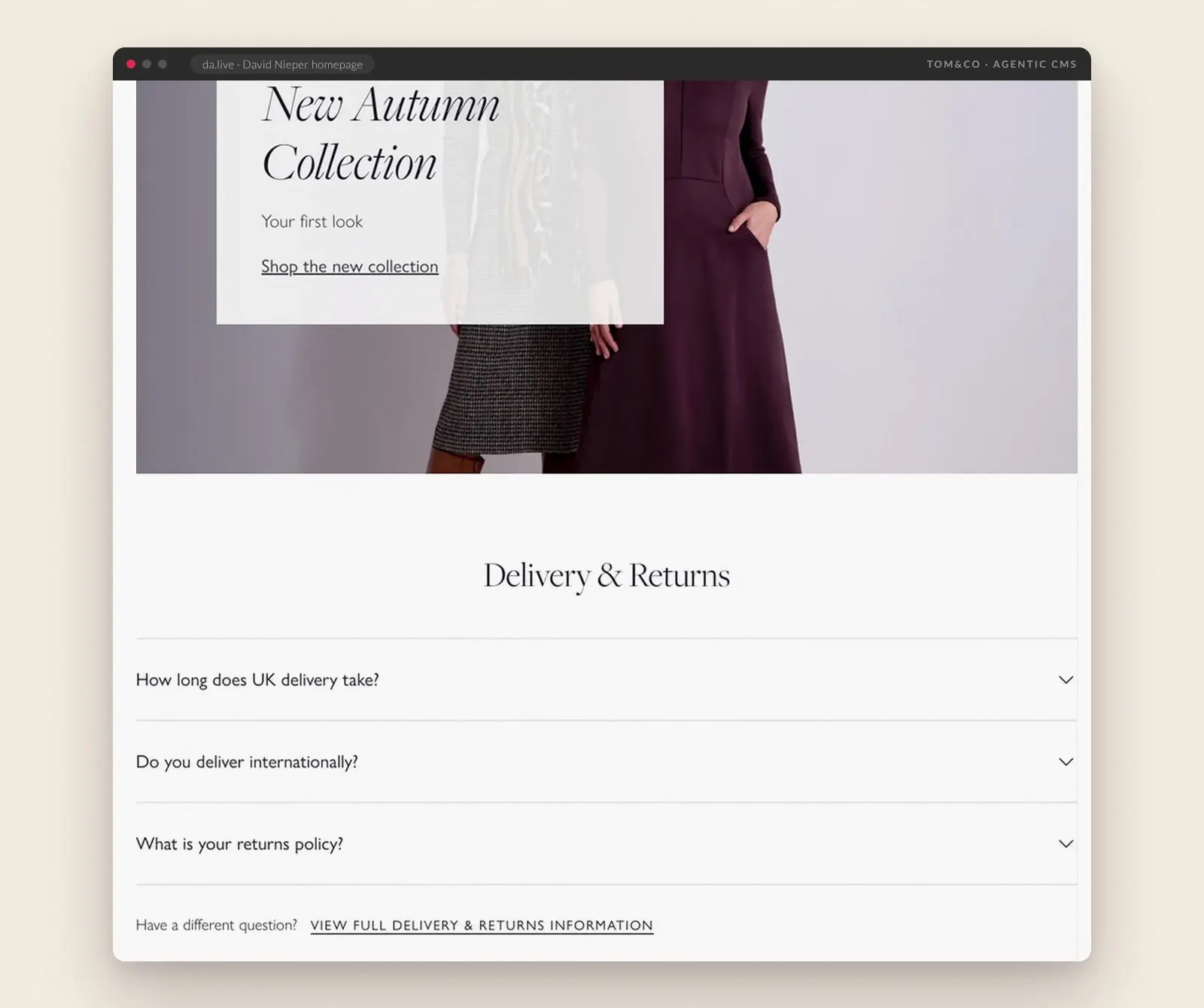
"Add an FAQ block under the hero with three questions about delivery and returns."
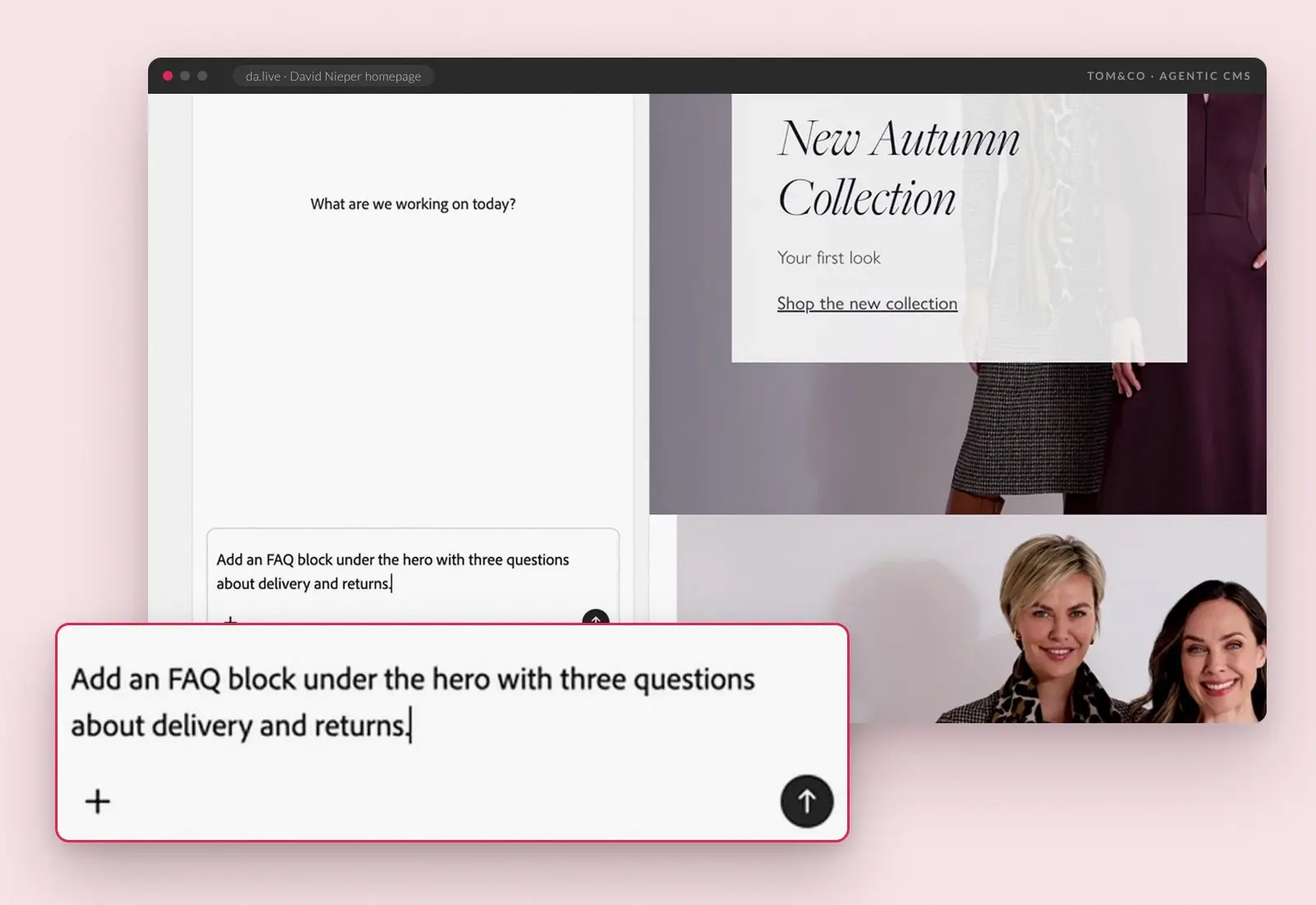
Here's what happened next:
The AI read the page first. It checked how the homepage is built and found the right place for the new section, directly under the hero.
It explained its plan. Before changing anything, it set out what it would add: a Delivery & Returns section with three questions and a link to the full delivery and returns page.
The change was approved. Nothing changed on the page until it was signed off.
The section appeared. A new Delivery & Returns section, covering UK delivery times, international delivery and the returns policy, was on the page in under a minute.
More than one new section
The FAQ is just one example. With the same CMS, the team can:
Edit in place. Any text can be changed right on the page, like turning the homepage headline from "New Autumn Collection" into "The Winter Collection".
Use built-in skills. The AI comes with skills for the jobs the team does most, from blog posts and category pages to SEO and metadata, brand voice, merchandising, FAQs and page quality checks.
Ask anything. The team can ask the AI how any page is built, and it breaks the page down block by block, including what shows on mobile, tablet and desktop.

Built on what ACCS already includes
The agentic CMS sits on top of the content tools that come with Adobe Commerce as a Cloud Service as standard:
Visual editing and document authoring. Pages can be edited visually, or written and updated in documents.
Localisation and scheduling. Content can be adapted for different markets, and campaigns can be scheduled in advance.
Firefly and Express. Adobe's generative AI tools are built in for creating and refining images and content.
Built-in experimentation. Pages can be A/B tested without extra tools or developer time.
Edge Delivery speed. Pages are served by Adobe's Edge Delivery Services, built for fast, search-friendly storefronts. David Nieper's new site scores 95 out of 100 for mobile speed.
Why it matters
For the David Nieper team, it means new collections, campaigns and content can go online in minutes, on their own schedule, with every change on brand and signed off by them. For us, it means more of our time together goes on new features, better customer experiences and fresh ideas.